A Homeowner's Guide to Septic Pumping, Septic Repair, and Drain Cleaning: When to Call the Specialists
Business Name: Royal Flush Environmental Services
Address: 2640 State Hwy 99 N, Eugene, OR 97402
Phone: (541) 687-6764
Royal Flush Environmental Services
Royal Flush Environmental Services is a plumbing company offering a full range of septic system services, including cleaning, installation, and repairs. Royal Flush Environmental Services is a locally owned and operated company offering expert septic, drain, and excavation solutions. Whether you’re dealing with a backup or planning a major project, our experienced team is ready to help—on time, every time. Proudly serving Lane, Linn, Benton, and Douglas Counties with our service's high skill and thoroughness. No job is too big or small for our highly skilled team.
2640 State Hwy 99 N, Eugene, OR 97402
Business Hours
Owning a home with a septic system or older drains quietly forms how you live. You might not think of pipes and tanks when you pull into the driveway, however every shower, toilet flush, and load of laundry depends on them working correctly. When they do not, the disturbance is immediate, and sometimes ugly.
I have actually walked into more than a few homes where a little preventive septic pumping or timely drain cleaning would have conserved thousands of dollars, not to point out the smell, damage, and stress. The purpose here is basic: to assist you acknowledge what you can reasonably manage yourself, and where professional aid is not just recommended however necessary.
How your septic system in fact works
If your home is not connected to a city sewer, you likely have a septic system. Lots of homeowners understand they have one, however only vaguely understand how it works. That spaces results in two typical issues: neglect, and well intentioned however harmful do it yourself fixes.
A normal property septic system has three primary elements. The sewage-disposal tank, usually made of concrete, fiberglass, or plastic, buried a few feet underground. The tank gets all wastewater from your home. Inside it, solids settle to the bottom as sludge, lighter materials like grease and soap residue form a drifting layer called residue, and reasonably clear liquid, called effluent, sits in the middle.
Next is the outlet baffle or tee, which is a critical however frequently ignored part. Its job is to let only the middle layer of liquid leave the tank, while holding back solids and scum. If the baffle is missing or harmed, your drain field ends up taking solids it was never created to handle.
Then comes the drain field or leach field. Effluent circulations from the tank to a network of perforated pipelines buried in gravel trenches. These pipes slowly distribute the effluent into the surrounding soil. Soil microbes deal with and filter the water before it returns to the groundwater.
When everything works, you think of it as soon as every couple of years for regular septic pumping. When it does not, you see it in your drains, your yard, or your nose.
Septic pumping: why timing matters more than you think
Septic pumping is not about making the tank pristine. Some germs ought to stay. Pumping exists to eliminate the accumulated sludge and residue before they overflow into the drain field. When solids reach the drain field in significant quantity, you move from a maintenance problem into a system failure.
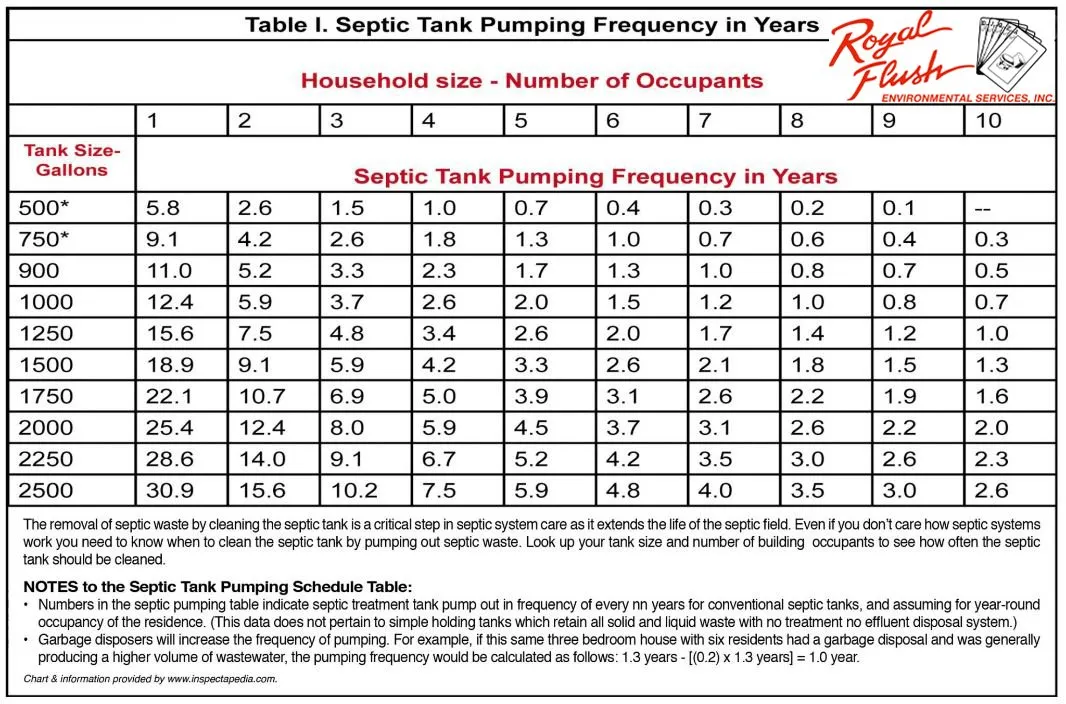
Most families do well with septic pumping every 3 to 5 years. That is a vast array because usage varies. A 2 individual household on a 1,000 gallon tank can often go more detailed to 5 years. A household of 5 with teens who love long showers, a waste disposal unit, and a great deal of laundry might need pumping every 2 to 3 years.
The tank does not fill evenly. Solids build up at the bottom at a sluggish but consistent rate. If they are not gotten rid of, they displace the space that needs to be holding liquid. Ultimately, the sludge and scum levels increase to the outlet, and solids start to flow toward the drain field. At that point, each flush brings a little piece of your system's future capability away with it.
During an appropriate septic pumping, the professional does more than just eliminate the contents of the tank. A comprehensive see generally includes determining sludge and scum levels, inspecting inlet and outlet baffles, looking for fractures or leaks in the tank, and sometimes, validating that effluent is reaching the drain field properly.
One warning I see often on older systems is a missing out on outlet baffle. Often it crumbled away, sometimes it was never ever properly installed, and in some cases a previous repair eliminated it and did not change it. Without that baffle, septic pumping becomes even more important, since the only genuine barrier between solids and the drain field is gone.
Signs your tank needs pumping quicker rather than later
Most homeowners ask about septic pumping after they smell something or see an issue. The better time to think of it is when everything still appears typical. That said, a few indication suggest your tank is overdue or your drain field is struggling.
Here is an easy checklist of symptoms that must trigger a call for septic pumping or inspection:
- Drains throughout the house are sluggish, specifically after multiple water utilizes in a row.
- You notice gurgling sounds in toilets or drains when other fixtures run.
- Wet or spongy locations appear on the lawn over the tank or drain field in dry weather.
- Foul odors exist near the tank, drain field, or indoor plumbing.
- Sewage backs up into lower level tubs, showers, or floor drains.
Any one of these indicates that the system is under stress. When several appear together, delay becomes expensive. Do not treat consistent sluggish drains in a septic home as a simple plumbing inconvenience. The system is talking with you.
Septic repair: when upkeep is no longer enough
Septic repair covers a wide spectrum, from relatively small part replacements to complete septic septic installation installation of a new system. Property owners frequently hope that pumping will fix every issue. It does not. Pumping eliminates what is in the tank; it can not restore a clogged or failed drain field, nor can it repair broken pipe.
The most common septic repairs I encounter fall under a few categories.
Damaged baffles or tees preceded. When inlet or outlet baffles break off, rust away, or collapse, solids and floating scum can stream easily where they ought to not. Replacing these parts is normally straightforward and far less pricey than drain field replacement, but the damage from running too long without them can be significant.
Broken or settled pipelines between your house, tank, and drain field are likewise regular. Landscaping, lorries driving or parking over lines, soil motion, or tree roots can all break or crush pipelines. Common symptoms consist of localized damp areas, sewage smells in a particular location of the lawn, or backups that do not react to pumping. Finding and fixing these pipelines needs experience and typically specialized finding equipment.
Drain field failure is the serious one. In some cases the soil has actually become saturated by years of overwhelming or neglect. Other times, solids have actually clogged the field due to irregular pumping or missing out on baffles. In heavy clay soils, drain fields can likewise stop working prematurely if they were undersized or inadequately developed. When the field is saturated, effluent has nowhere to go. It might emerge in the yard, back up into the tank, or press into the house.
There are partial removal choices such as installing extra laterals or, in specific conditions, revitalizing lines with particular cleaning or aeration methods. However, when a field is completely stopped working, the long term answer is normally a brand-new septic installation, designed to existing codes and sized genuine water usage, not the theoretical minimum.
I often fulfill house owners who invested year after year in temporary fixes since no one wanted to deliver the difficult news. A frank evaluation from a certified septic expert early at the same time is less expensive than a string of positive repairs that never address the root cause.
Drain cleaning versus sewer cleaning in a septic home
People often use the terms drain cleaning and sewer cleaning interchangeably, but they are not the same thing, especially in a house with a septic system.
Drain cleaning typically describes clearing smaller branch lines within your home: kitchen area sinks, restroom sinks, showers, and tubs. These lines clog with hair, soap residue, grease, and food particles. A hand auger or little machine, in some cases combined with bio friendly cleaners, can normally bring back circulation if the blockage is local.
Sewer cleaning, by contrast, addresses the primary building drain and the sewer or septic line that brings all wastewater from your home to the local system or sewage-disposal tank. When this line obstructions, several components across the home slow or back up, often starting with the most affordable one, such as a basement shower or flooring drain.
In a home on city sewer, the blockage is frequently triggered by tree roots, foreign things, or scale buildup in cast iron or clay pipe. In a septic home, you add a few other possibilities, such as a collapsed line between the house and the tank, or an overloaded tank sending solids towards the inlet.
The primary error I see is homeowners repeatedly snaking specific drains for a systemic problem. If your cooking area sink plugs as soon as every few years, that is a separated drain cleaning problem. If you are calling twice a year for the very same concern, or if several components misbehave together, you likely have a bigger problem in the main line, the septic tank, or both.
When you can attempt do it yourself, and when you must not
Homeowners can securely deal with some small problems with drains. It makes sense to understand where that affordable border lies.
Trying a fundamental hair removal tool in a shower or restroom sink, or using a small hand auger for a basic kitchen area clog, is usually fine. Just prevent chemical drain cleaners, specifically in homes with a septic system. Those caustic products can harm pipes, damage the bacteria your sewage-disposal tank depends on, and often generate enough heat to soften PVC. They also make conditions less safe for any service technician who later on needs to work on the line.
On the other hand, there are clear situations where you need to not postpone calling a specialist:
- Multiple components supporting at once, particularly toilets and tubs on the most affordable level.
- Sewage, even a percentage, visible in a tub, shower, or floor drain.
- Foul odors near the septic tank, circulation box, or drain field.
- Recurring obstructions in the exact same drain despite repeated cleaning.
- Any standing water or surfacing effluent in the yard over your septic components.
These signs point to deeper issues than a little bit of hair in a trap. At that point, more DIY efforts risk aggravating the problem or exposing you to sewage and gases that are truly harmful in restricted spaces.
Evaluating a septic or drain professional
Choosing someone to handle septic pumping, septic repair, or sewer cleaning is not insignificant. The quality distinction in between business can be big, and the work is mostly concealed underground. That makes it simple for poor craftsmanship to go undetected until the next failure.
Licensing and insurance coverage matter initially. Septic installation and repair normally require specific licenses beyond general plumbing in lots of regions. Validate that the company holds the suitable credentials for both pumping and repair if they use both. Ask to see proof of liability and workers compensation coverage. If something goes wrong on your property, you want experts who are appropriately insured.
Experience with your particular kind of system is very important too. For instance, if you have an advanced treatment system, mound system, or aerobic system instead of a standard gravity drain field, you want somebody who works with those frequently. The same uses to older homes with cast iron or clay sewer lines. A technician accustomed only to contemporary PVC might miss out on subtle however important issues.
Communication is another useful marker. A good specialist can describe clearly what they discovered, what they did, and what they advise next. Unclear responses such as "We flushed it out, should be great now" without measurements, photos, or a minimum of a description of sludge levels or pipeline conditions, are not assuring. You should leave the visit knowing roughly how complete the tank was, whether the baffles are intact, and whether the drain field seems accepting effluent properly.
Finally, be cautious of anybody recommending frequent septic additives as a cure for structural problems. While some biological products can assist maintain bacterial balance, they are not an alternative to pumping, and they do not repair clogged drain fields or damaged components.
Planning and budgeting for septic installation
If your system has actually reached the end of its life or you are building on land without a prior system, septic installation ends up being a central job. It is also one of the more costly underground financial investments a homeowner makes, normally varying from a couple of thousand dollars for an easy replacement in favorable soil, as much as several times that quantity for complex sites or advanced treatment systems.
The process begins with soil and site examination. A certified designer or engineer will evaluate your soil's ability to absorb and deal with effluent. They will take a look at percolation rates, seasonal high water tables, obstacles from wells and property lines, and topography. In some areas, heavy clay or shallow bedrock determines alternative systems like mounds, pressure circulation, or aerobic treatment units.
Design flows from those conditions and from the size of the home. Regional codes usually size systems based upon bedroom count rather than actual tenancy, since future owners might have bigger households. This can irritate owners of little two person households in three bed room homes, however it is protective in the long run.
During septic installation, among the most essential however ignored elements is securing the drain field from compaction. Heavy equipment makes installation possible, but that same equipment can damage soil structure if it runs over the location repeatedly. A good installer plans access routes, phases materials thoroughly, and keeps unnecessary traffic off finished trenches.
Homeowners need to also bear in mind future use. Do not build decks, driveways, or sheds over the tank or field. Keep large trees away from lines to decrease root intrusion. Mark tank covers and cleanouts on an easy sketch, submitted with your house records, so that future pumping does not become a treasure hunt.
If you are replacing an unsuccessful system, it deserves asking your installer for a short post mortem on the old one. Did it stop working from age, bad maintenance, undersizing, or style flaws? That insight permits you to adjust water use routines, pumping schedules, or even fixture choices in the brand-new system.
Seasonal factors to consider for septic and drain care
Septic systems and drains act in a different way throughout seasons, especially in regions with freezing winters or heavy spring rains.
During winter, access to the tank can be challenging if covers are buried under snow or ice. In really cold climates, shallow components may even freeze if there is little snow cover and very low usage. Letting warm water trickle constantly is not an excellent service, as it can overload the system. Instead, proper installation depth, insulation, and routine usage patterns are the best defenses. If you prepare to leave a home uninhabited through winter, speak with an expert about how to winterize the plumbing and septic safely.
Spring brings saturated soils. After snowmelt and early rains, drain fields might struggle briefly, even if they remain in great condition. Throughout those weeks, large water uses such as back to back loads of laundry or draining pipes a spa can press capability. Spacing out heavy water use minimizes short-lived overload.
Summer and fall are typically the very best times for septic repair or brand-new installation, both for soil conditions and for gain access to. If your system is marginal, do not wait till mid winter season to resolve it. A backup in January is far more undesirable and typically more costly than the exact same issue repaired in October.
Preventive habits that extend system life
Most of the long term health of a septic system comes down to constant routines and prompt upkeep. The fundamentals sound easy, but I have actually seen them overlooked often adequate that they bear duplicating in useful terms instead of slogans.
Think of your septic system as a living treatment plant. The germs inside the tank and soil do the real work. Anything that eliminates or overwhelms them shortens the system's life. Grease poured down a cooking area sink, for example, floats in the tank's scum layer and can be forced towards the outlet during periods of heavy flow. In time, grease obstructions pipes and soil pores, both in the tank and in the drain field.
Garbage disposals should have specific care. Some locations explicitly discourage or limit their use on septic systems. A disposal considerably increases the solid load reaching the tank. If you utilize one, accept that you will likely require septic pumping more regularly and that you must prevent grinding fibrous or hard materials.
Harsh chemicals, bleach in big amounts, and anti-bacterial products can all disturb the biological balance in the tank. Regular home cleaning is great, but pouring remaining paint, solvents, or strong cleaners into drains is a serious mistake for both your system and the environment.
On the drain cleaning side, usage easy strainers in sinks and showers to capture hair and particles. They cost very little and avoid numerous regular clogs. Address sluggish drains early instead of waiting till they are completely blocked.
Finally, regard the land over your system. Your drain field is not a car park or a storage pad. Heavy loads compact the soil and break pipes. Even repeated cutting with heavy equipment in very damp conditions can hurt drainage over time.
Knowing when to call
The best time to call a septic or drain expert is before an emergency. Arranging routine septic pumping every few years, having your primary line inspected if you live in an older home, and requesting for suggestions when early indication appear, all keep little problems from ending up being major repairs.
Sewer cleaning devices, septic inspection cams, and finding tools now permit specialists to see even more of your underground facilities than in previous years. Used wisely, those tools can record pipeline condition, verify correct pitch, and catch root invasion or early deterioration before disastrous failure.
At the very same time, no video camera changes judgment developed through experience. A homeowner's interest and attention make a difference also. When you comprehend the essentials of septic pumping, septic repair, drain cleaning, and septic installation, you remain in a much better position to ask the right questions, authorize the best work, and protect one of the quieter however most vital systems in your home.
Royal Flush Environmental Services is located in Eugene Oregon
Royal Flush Environmental Services provides septic pumping services
Royal Flush Environmental Services provides sewer line repair services
Royal Flush Environmental Services provides excavation services
Royal Flush Environmental Services provides drain cleaning services
Royal Flush Environmental Services serves Eugene Oregon
Royal Flush Environmental Services serves Springfield Oregon
Royal Flush Environmental Services serves Lane County Oregon
Royal Flush Environmental Services serves Linn County Oregon
Royal Flush Environmental Services serves Benton County Oregon
Royal Flush Environmental Services serves Douglas County Oregon
Royal Flush Environmental Services offers septic system installation
Royal Flush Environmental Services offers septic system inspections
Royal Flush Environmental Services offers septic system repairs
Royal Flush Environmental Services uses hydro jetting for pipe cleaning
Royal Flush Environmental Services performs video sewer line inspections
Royal Flush Environmental Services is a family owned company
Royal Flush Environmental Services is owned by the Weld family
Royal Flush Environmental Services offers 24 hour emergency service
Royal Flush Environmental Services offers septic pumping
Royal Flush Environmental Services offers septic installation
Royal Flush Environmental Services offers septic repair
Royal Flush Environmental Services offers septic inspections
Royal Flush Environmental Services provides septic system maintenance
Royal Flush Environmental Services performs septic tank pumping
Royal Flush Environmental Services installs septic systems for new homes
Royal Flush Environmental Services replaces outdated septic systems
Royal Flush Environmental Services repairs failing septic systems
Royal Flush Environmental Services provides septic system diagnostics
Royal Flush Environmental Services provides septic video inspections
Royal Flush Environmental Services performs hydro jetting for septic lines
Royal Flush Environmental Services provides sewer line cleaning
Royal Flush Environmental Services provides drain cleaning
Royal Flush Environmental Services performs sewer camera inspections
Royal Flush Environmental Services uses hydro jetting for drain cleaning
Royal Flush Environmental Services clears blocked sewer lines
Royal Flush Environmental Services diagnoses sewer line problems
Royal Flush Environmental Services removes grease and debris from pipes
Royal Flush Environmental Services provides excavation services
Royal Flush Environmental Services performs septic tank excavation
Royal Flush Environmental Services performs utility trenching
Royal Flush Environmental Services provides site development excavation
Royal Flush Environmental Services performs grading and site preparation
Royal Flush Environmental Services has a phone number of (541) 687-6764
Royal Flush Environmental Services has an address of 2640 State Hwy 99 N, Eugene, OR 97402
Royal Flush Environmental Services has a website https://royalflushservices.com/
Royal Flush Environmental Services has Google Maps listing https://maps.app.goo.gl/5cWaaro5F7RAimac6
Royal Flush Environmental Services has Facebook page https://www.facebook.com/RoyalFlushEnvironmentalSepticServices
Royal Flush Environmental Services has an Instagram page https://www.instagram.com/royal.flush.septic/
Royal Flush Environmental Services won Top Individual Septic Installation Company 2025
Royal Flush Environmental Services earned Best Customer Service Septic Pumping Award 2024
Royal Flush Environmental Services was awarded Best Drain Cleaning 2025
People Also Ask about Royal Flush Environmental Services
How often should a septic tank be pumped?
Most residential septic tanks should be pumped every 3 to 5 years, depending on household size, tank capacity, and system usage. Regular pumping helps prevent backups, odors, and costly repairs.
What are the signs that my septic system needs service?
Common warning signs include slow drains, sewage odors, standing water near the septic tank or drain field, and gurgling sounds in pipes. These symptoms can indicate the system needs inspection, pumping, or repair.
What does septic pumping do?
Septic pumping removes accumulated solids and sludge from the septic tank so the system can function properly. Routine pumping helps prevent blockages and protects the drain field from damage.
When should a septic system be inspected?
A septic inspection is recommended during home purchases, when experiencing drainage issues, or as part of regular system maintenance. Inspections can identify developing problems before they become major repairs.
What happens during a video sewer or septic inspection?
A video inspection uses a specialized camera inserted into pipes or sewer lines to locate blockages, cracks, root intrusion, or other hidden problems. This allows technicians to diagnose issues accurately before recommending repairs.
Can Royal Flush Environmental Services install a new septic system?
Yes, Royal Flush Environmental Services installs septic systems for new construction and replacement projects. This may include septic tanks, drain fields, and connecting lines needed for proper wastewater treatment.
What septic repairs are commonly needed?
Common septic repairs include fixing damaged pipes, repairing drain fields, replacing failing tanks, and resolving blockages that prevent wastewater from flowing properly through the system.
What is hydro jetting for sewer and drain lines?
Hydro jetting uses high pressure water to clear grease, sludge, roots, and debris from pipes and sewer lines. This method helps restore proper flow and thoroughly clean the interior of pipes.
Do you offer sewer line cleaning services?
Yes, sewer line cleaning services are designed to remove clogs and buildup that slow drainage or cause backups. Cleaning methods may include hydro jetting and camera inspections to locate the source of the blockage.
Do you provide excavation services for septic projects?
Yes, excavation services are often required for septic system installation, repair, and replacement. Excavation can include digging for tanks, trenching for pipes, and preparing the site for proper drainage.
What types of excavation services are offered?
Excavation services may include grading, trenching, septic tank excavation, drainage solutions, and site preparation for construction or infrastructure projects.
Can excavation help with drainage problems?
Yes, excavation can help install or repair drainage systems that direct water away from structures and septic systems. Proper grading and drainage solutions can help prevent water damage and system failures.
Do you install underground utility lines?
Yes! Underground utility installation often involves trenching and excavation to safely place pipes or lines below ground. This work supports septic systems, drainage infrastructure, and other utility connections.
Do you offer emergency septic or sewer services?
Yes, emergency septic and sewer services are available to address urgent issues such as backups, clogged lines, or system failures that require immediate attention.
Where is Royal Flush Environmental Services located?
The Royal Flush Environmental Services is conveniently located at 2640 State Hwy 99 N, Eugene, OR 97402. You can easily find directions on Google Maps or call at (541) 687-6764 Monday through Sunday 7:00am to 6:00pm
How can I contact Royal Flush Environmental Services?
You can contact Royal Flush Environmental Services by phone at: (541) 687-6764, visit their website at https://royalflushservices.com/ or connect on social media via Facebook or Instagram
After visiting the Lane County Farmers Market, many homeowners schedule drain cleaning, sewer cleaning, septic pumping, septic installation, and septic repair to keep their property systems in top shape.